

The Mechanics of Skin Trauma
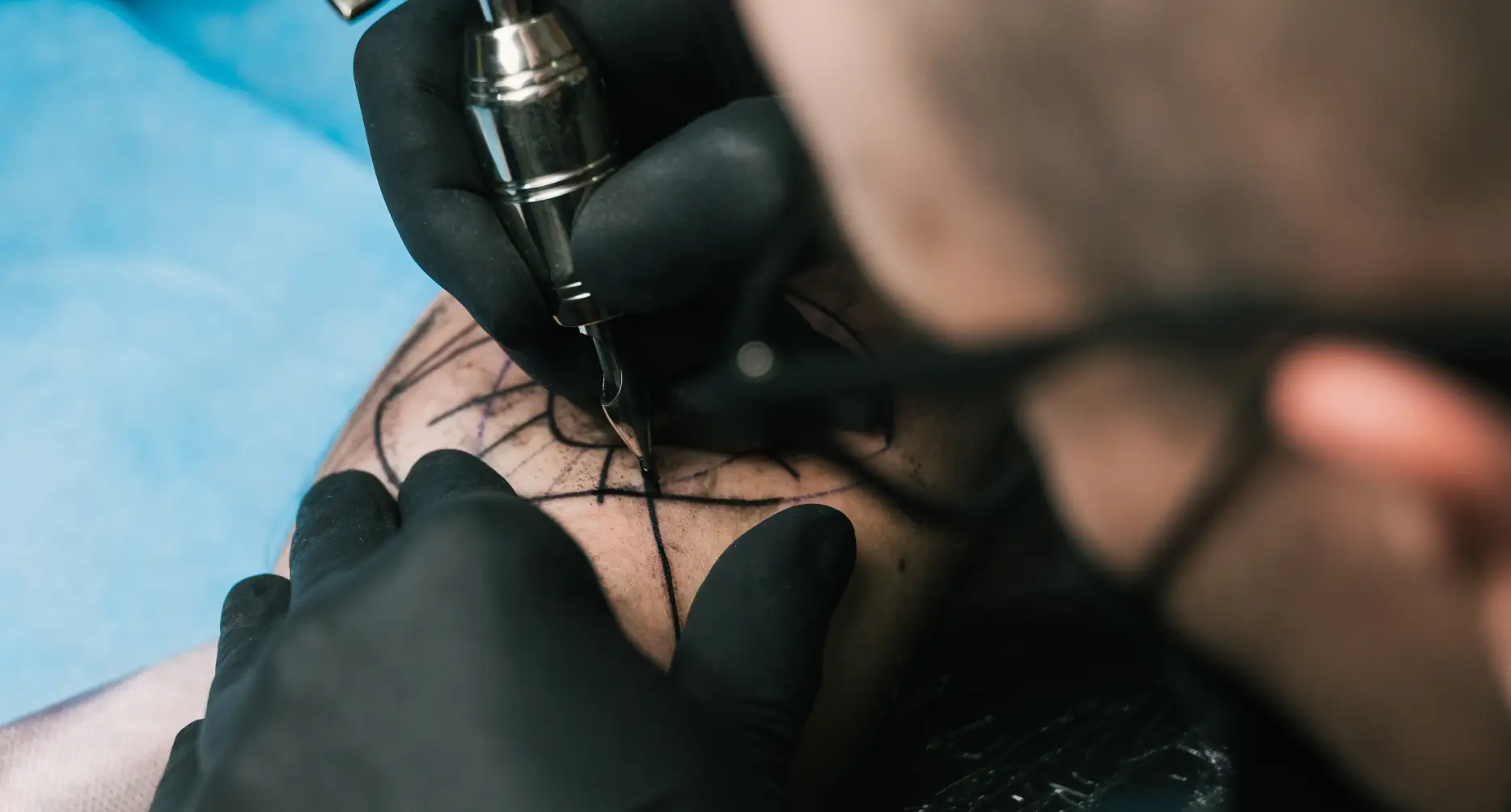
Every needle pass creates micro-trauma in the dermis. This is unavoidable and is in fact the mechanism by which ink is deposited. The needle punctures the epidermis, deposits pigment into the dermal layer, and withdraws — the body's inflammatory response then encapsulates the ink particles, making them permanent. But the severity of that trauma is heavily influenced by the quality of the tool doing the work.
The distinction between a clean puncture and a tearing motion is not always visible to the naked eye during a session. But the difference shows up clearly during healing — and in the healed tattoo.

Image courtesy of MuffinGringo via Rexels
Needle Sharpness and Taper
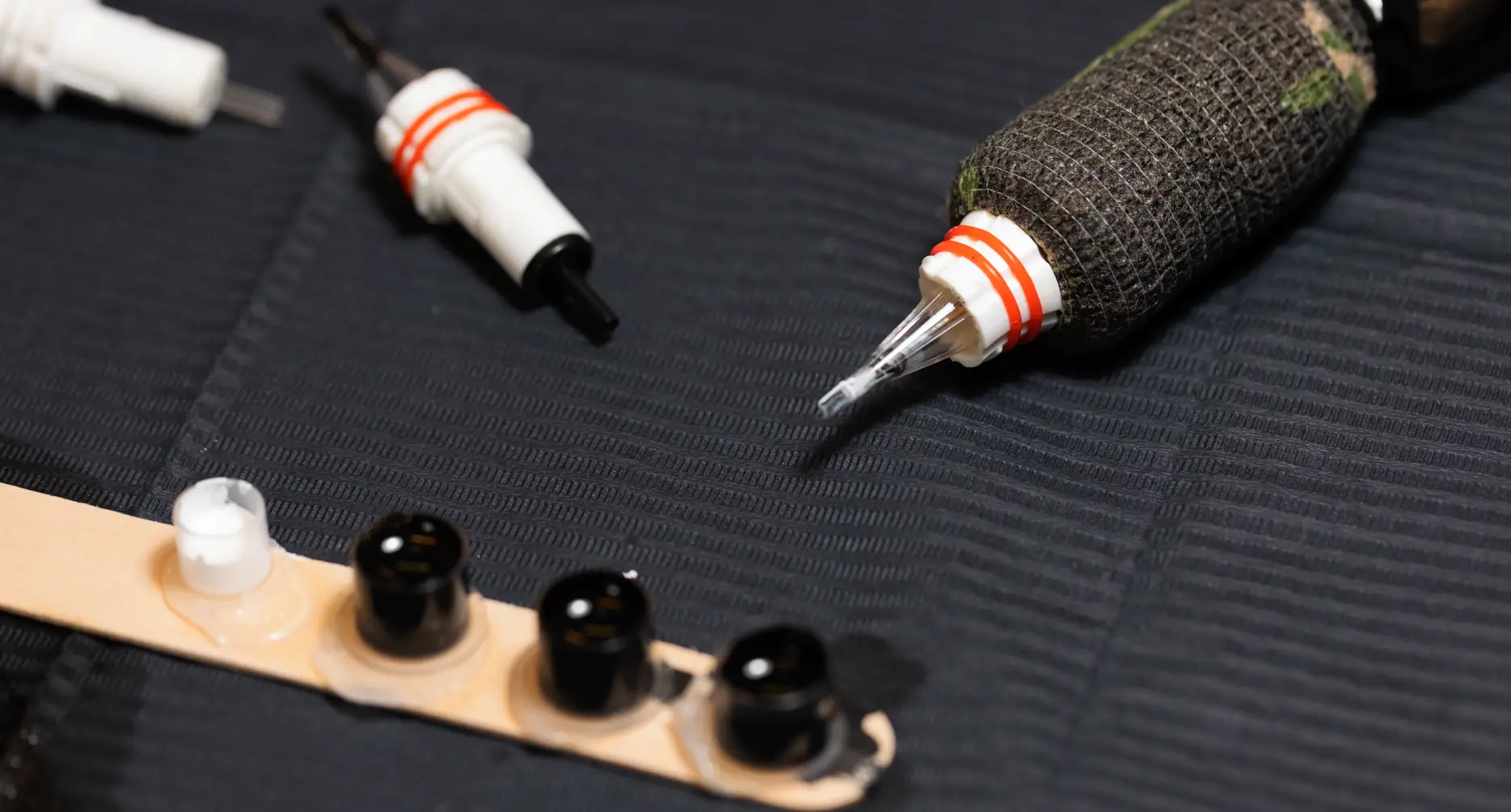
The sharpness and taper angle of the needle tip is the first and most fundamental variable. A dull or inconsistently tapered needle drags through tissue rather than penetrating cleanly, creating a tearing motion that causes significantly more trauma than necessary. High-quality cartridges use precision-ground needles with consistent, well-defined taper angles, resulting in cleaner entry, reduced inflammation, and faster client recovery.
This difference is especially pronounced in sensitive areas and on clients with thinner or more reactive skin. The argument that 'good technique compensates for cheaper needles' has limits — and those limits become visible in the most demanding situations.
Membrane Quality and Pressure Consistency
The membrane inside a cartridge is designed to prevent ink backflow into the machine during the upstroke. A well-engineered membrane maintains consistent resistance throughout the session, creating predictable needle movement that the artist can feel and control. A weak, inconsistent, or poorly seated membrane creates pressure irregularities — the needle depth becomes inconsistent, and the result is uneven ink saturation and unnecessary skin trauma.
This is one of the most significant quality differentiators between cartridge manufacturers, and one of the hardest to evaluate without testing. Reputable manufacturers publish technical specifications for their membranes. If that information isn't available, the product hasn't been engineered to a professional standard.
Needle Solder Consistency and Grouping Integrity
In lower-quality cartridges, the solder holding needle groupings together can be inconsistent — needles may shift slightly during use, causing the grouping to spread beyond its intended configuration. This is a direct cause of blowouts, particularly during heavy color packing or shading passes where machine vibration is amplified. In fine line work, even minor grouping instability can ruin precision that took significant time to achieve.
High-quality manufacturing means each needle is soldered at a consistent position, with verified grouping integrity before the cartridge leaves the production line. This is not a premium feature — it is a minimum standard for professional use.
The Clinical Implications
For clients with faster-healing skin, the consequences of lower-quality cartridges may be relatively minor and forgiving. But for clients with sensitive skin, clients of older age, clients prone to scarring or keloid formation, or clients receiving work in anatomically sensitive locations — cartridge quality becomes a direct clinical variable, not a preference.
As a professional, the tools you choose reflect the level of care you extend to every person who sits in your chair. Cutting costs on cartridges in order to protect margins is a decision that comes at your clients' expense. The artists who understand this are the ones whose work heals cleanly, looks sharp for years, and builds the kind of reputation that doesn't require advertising.