


Fine Line and Micro-Realism Continue to Dominate
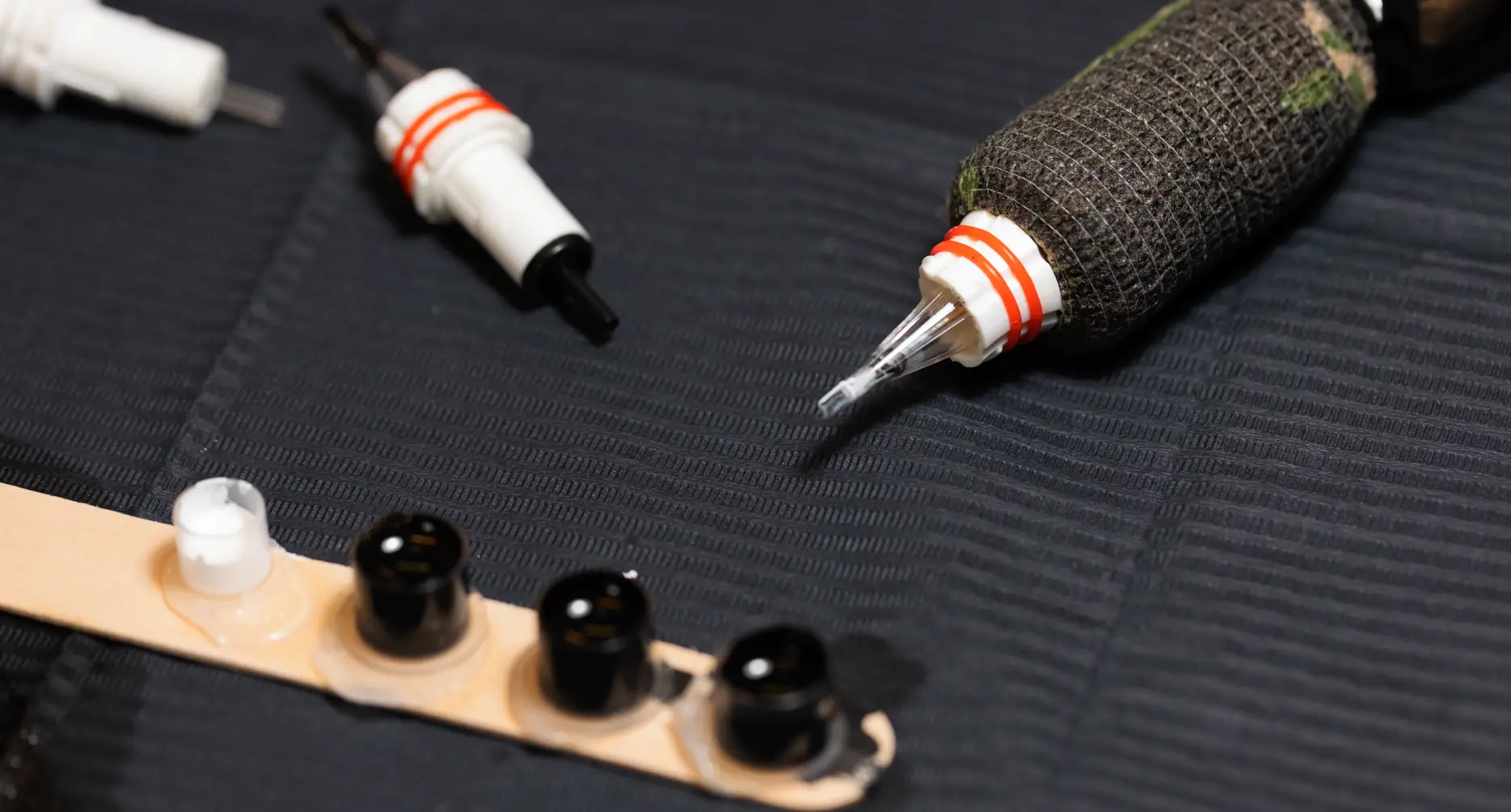
The demand for fine line and micro-realism tattoos shows no sign of slowing down. Clients are requesting increasingly intricate designs — near-photographic portraits, botanical studies, architectural details — in formats that are smaller and more precisely executed than ever before. This has driven meaningful innovation in cartridge technology: tighter needle groupings, improved membrane systems, and more consistent solder quality are all direct responses to what artists working in this style need.
For studios looking to capture this market, investment in high-quality fine cartridges and deliberate practice with single-needle technique is essential. This is not a forgiving style — the quality of your supplies is visible in every line.

Image courtesy of MuffinGringo via Rexels
Skin Tone Inclusivity — A Long Overdue Evolution
The conversation around tattooing on deeper skin tones has finally moved from the margins into the mainstream. Artists are investing more seriously in understanding how different pigments behave across the full spectrum of complexions, and ink manufacturers are responding with product lines specifically formulated for deeper skin. This is a significant and overdue development for the industry.
Studios that invest in this knowledge — through education, practice, and appropriate ink selection — will be well positioned as the client base for tattooing continues to diversify. This isn't just about ethics, though that matters too. It's about technical excellence and serving your full potential market.
Sustainability Is Becoming a Client Expectation
Eco-conscious tattooing is moving from niche preference to mainstream expectation, particularly among younger clients. Biodegradable packaging, reduced single-use plastic in supply chains, cruelty-free ink formulations, and energy-efficient studio setups are all areas where artists and supply companies are being asked to demonstrate responsibility. Suppliers who are ahead of this curve will have a meaningful advantage as it becomes table stakes.
Tattoo Tourism and the Global Artist Economy
Social media has created an international market for individual artist styles, and tattoo tourism — clients traveling specifically to be tattooed by a particular artist — is now a significant part of how top studios operate. This creates new commercial opportunities but also raises the bar for consistency, professional presentation, and client communication across languages and time zones.
AI-Assisted Design Tools on the Horizon
Artificial intelligence is entering the tattoo design workflow, primarily as an accelerator for the concept-to-stencil phase. AI tools can rapidly generate reference images, explore compositional variations, and produce base stencils that artists then refine. This is not replacing artistic skill — it is removing friction from the early stages of the creative process.
Expect AI-assisted design to become a standard part of the professional studio toolkit within the next two to three years. Artists who learn to work with these tools effectively will have a significant efficiency advantage over those who resist them.