

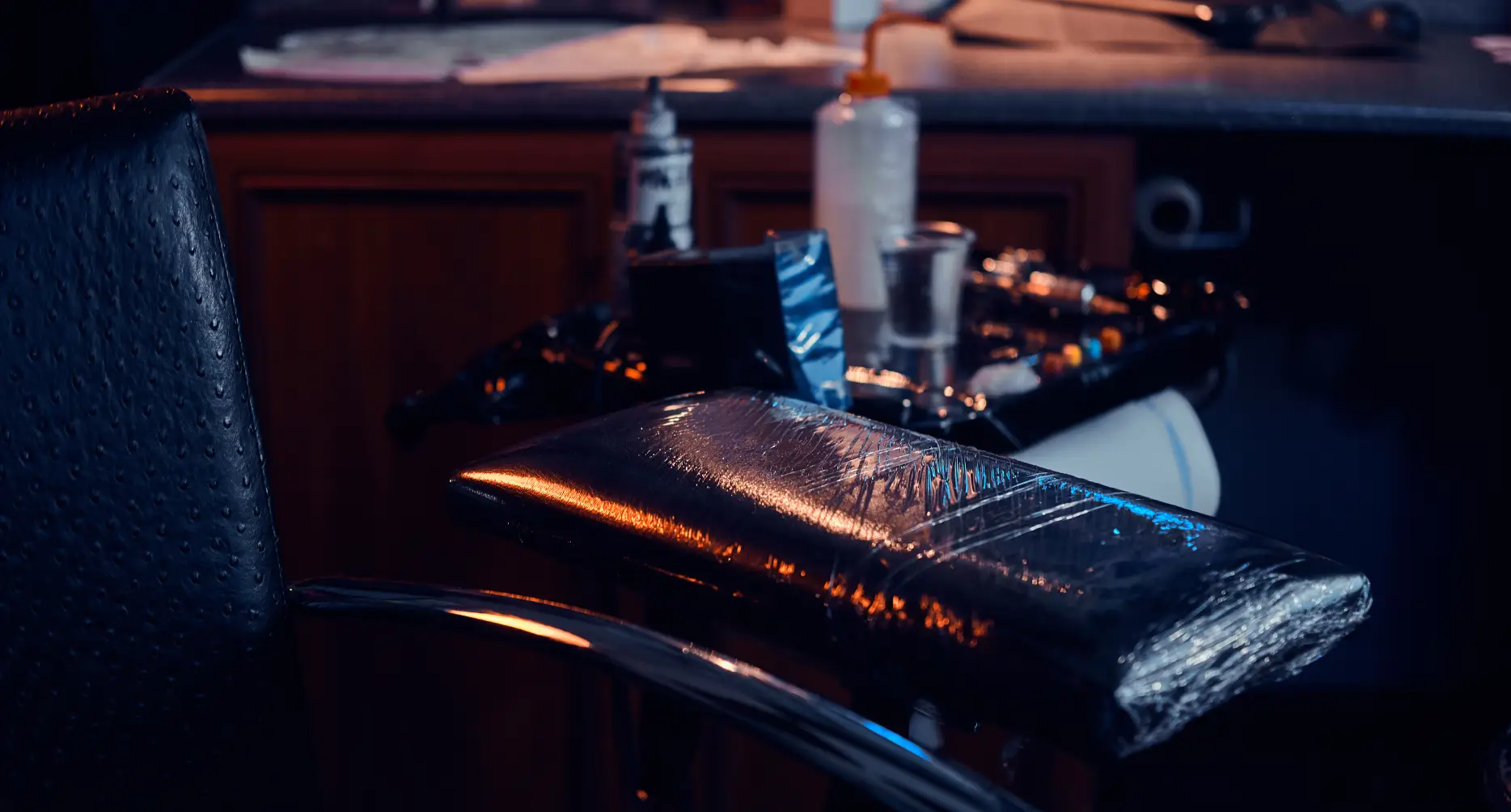
Surface Sterilization — Before and After Every Client
Surface sterilization should happen before and after every single client, not just at the end of the working day. This includes the work surface, the chair or bench, any trays or equipment nearby, and the floor surrounding the work area. Use EPA-registered disinfectants that are specifically rated for bloodborne pathogen exposure — standard household cleaners do not meet this standard.
Single-use protective covers are non-negotiable. Clip cord covers, machine bags, spray bottle covers, and armrest covers should all be replaced between clients. These items are cheap. The consequences of skipping them are not.

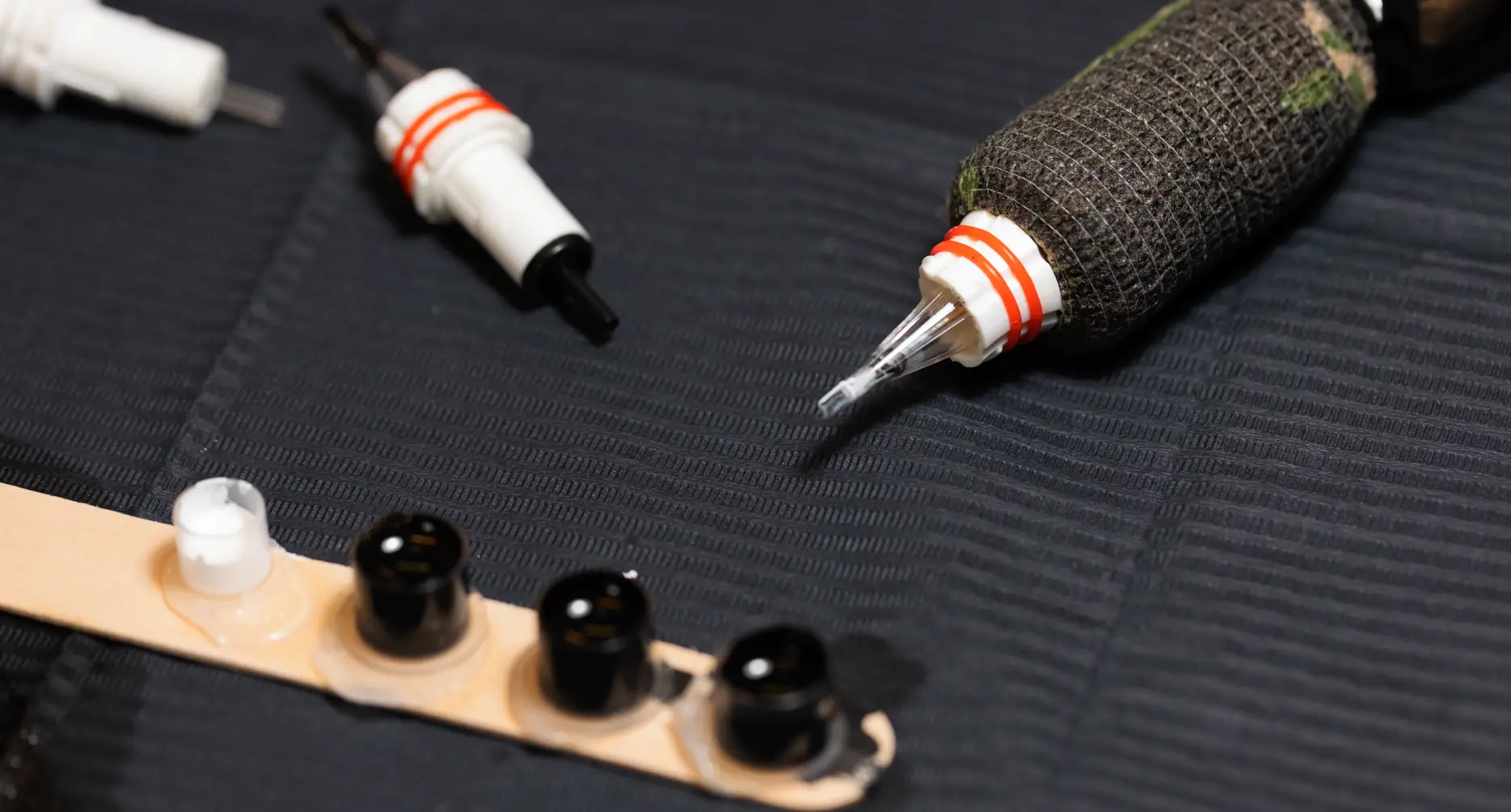
Image courtesy of MuffinGringo via Rexels
Sharps Disposal — Know Your Local Regulations
Needle cartridges and loose needles must go directly into an approved sharps container immediately after use. Never place them in general waste, never recap them, and never leave them sitting on the work surface between steps. Most jurisdictions require licensed biomedical waste disposal services to collect full sharps containers — check the specific regulations in your area, as fines for improper disposal can be significant.
Keep a log of disposal dates and service provider documentation. In the event of an inspection, this paperwork demonstrates consistent compliance and protects your license.
Cross-Contamination — Where Most Studios Fall Short
Cross-contamination prevention is the area where even experienced artists often develop bad habits. Ink should always be decanted into single-use ink caps before the session begins — dipping directly into a bottle contaminates the entire supply. Wash bottles must be covered between uses. Gloves must be changed any time you touch a non-sterile surface during a session, including your phone, a pen, or the door handle.
The concept of a contaminated and uncontaminated zone is worth implementing formally in your studio. Once you establish a physical boundary between where sterile items live and where client contact occurs, your workflow becomes both safer and more consistent.
Artist Health — An Often Overlooked Priority
Hepatitis B vaccination is strongly recommended for all practicing tattoo artists. If you haven't had it, or aren't sure of your immune status, speak to a healthcare provider. Annual bloodborne pathogen training is another investment worth making — not just for compliance, but because protocols evolve and refreshing your knowledge keeps your practice sharp.
Hand hygiene before and after every client, despite glove use, is also a basic measure that many studios underestimate. Gloves are a barrier, not a substitute for clean hands.
Hygiene standards are not an administrative burden. They are what separates a professional studio from an amateur operation — and your clients can tell the difference.